

9 years ago
Tuesday, October 31, 2017
Wouldn't You Like to Know, Weather Boy?
A Nevada meteorologist was doing a live shot at a place that sells fireworks and he asked a kid standing nearby what are the best kind of fireworks to buy.
The kid's response was Internet gold. It's been seen millions of times and has been turned into numerous music tracks.
But it was a fake.
The kid is the son of the meteorologist. Not sure if they planned the response but they clearly had staged the moment to make it seem real.
After the kid's snarky remark, the meteorologist asks, "Where are your parents?'
Should the meteorologist be punished for creating a piece of fiction? Does this incident undermine his credibility?
Or does it not matter? It's just a fluff piece for the Fourth of July, you know?
Tuesday, September 12, 2017
Would You Want to Report From the Eye of a Hurricane?

Does that help to explain the severity of the event?
Or, is this grandstanding, hoping that something unusual will occur, thus making for dramatic television?
Do we need to see these reporters in the field during such dangerous conditions?
Would you want to be that reporter?
Wednesday, August 30, 2017
Is it Reporting or Snitching?

Did he overstep his role? Should a journalist simply observe and then report?
Or, if a journalist witnesses criminal activity, should they contact law enforcement?
Are there extenuating circumstances in this situation? You know, the area is totally submerged under water, the grocery store was likely closed (and stocked with food) and the locals who were trapped likely had nowhere else to get food.
Would you have informed the cops?

Tuesday, August 29, 2017
Bullies Are Bad But Should Emails Be News?
A Chicago news anchor recently received several nasty emails about her appearance.
One writer said, "Why are your dresses, outfits so skin tight for a pregnant woman?"
The anchor responded to the emails via a Facebook post, which read:
“To Karen, Gene and Sabrina who wrote to me today, use your time better. Pay someone a compliment. Do a good deed. To everyone else who has sent messages of congratulations and well wishes, you are keeping me motivated through these last 6 weeks.”
One writer said, "Why are your dresses, outfits so skin tight for a pregnant woman?"
The anchor responded to the emails via a Facebook post, which read:
“To Karen, Gene and Sabrina who wrote to me today, use your time better. Pay someone a compliment. Do a good deed. To everyone else who has sent messages of congratulations and well wishes, you are keeping me motivated through these last 6 weeks.”
The next day, the anchor addressed the situation on air.
Should the station have used air time to broadcast what was initially a private situation? Should they have turned the nasty emails into news? Aren't they just doing the story because it happened to one of their own?
Or, are they doing their audience a service by taking the bullying incident and making it a larger situation because it happened to a (relatively) famous person? Are they using her experience as a vehicle to address the larger issue?
Is there anything wrong with journalists doing stories about their personal experiences?
Wednesday, April 12, 2017
Does the Victim's Background Matter?

In the follow-up stories, several news organizations pointed out that the passenger had a criminal record.
The New York Post noted that he is "a lung doctor with a taste for gambling, a history of angry outbursts — and a conviction for trading narcotics prescriptions and cash for gay sex in motels."
Is that information relevant to the story?
Or is that just salacious information that adds intrigue and controversy to the story of the man being dragged off the plane?
Does the background of the victim become part of the story, even if the incident was completely unrelated?
Thursday, March 2, 2017
Should Journalists Report on the Families of Former Politicians?

Is this newsworthy? Is this something that news organizations should be reporting?
Thursday, February 23, 2017
Does Aggregating Trump Stories Show a Bias?

The first installment of the ongoing series ran yesterday. The intro to the post reads:
Our president makes a lot of news — almost too much to keep up with. So we're launching a daily roundup of Trump-related news and opinions, from Philadelphia and around the country.
Many news organizations have reporters who travel with presidents and document their activities. Few have reporters dedicated to covering presidents without actually following them as the presidents do their jobs.
Is the Trump presidency different, and therefore warrants a different style of coverage?
Does creating a beat about the president that doesn't directly report on the president show a particular bias?
By aggregating stories about the president, are they at risk of appearing to have a political agenda?
Tuesday, February 14, 2017
"It is a Fact and You Will Not Deny It."
What do you do when an interview subject keeps making claims without substantiating them?
Here are a few options:
• Accept the statements. They are the official statements, right?
• Ask for sources of the information.
• Stop the interview once evidence is not provided.
• Never have this person on the show again.
Did the interviewer here handle the situation well? What would you have done?
Thursday, January 26, 2017
How Involved Can Journalists Be in The Subjects They Report Upon?

Last week, in his column about this year's HOF nominees, Philadelphia Inquirer sports columnist Bob Ford (left) stated that despite being a member of the BBWAA, he does not vote. He wrote:
"My belief is that journalists should not be in the position of attempting to impartially report on a process in which they are involved. We don't let political reporters serve on candidate nomination committees or the like, and the principle is the same."
Do you agree?
Does voting mean that journalists cannot report on the process without a sense of bias, or even hypocrisy?
Or is he taking his role too seriously?
How involved can journalists be in the subjects they are reporting upon?
Can a finance reporter invest his/her money? Can a political reporter be registered as a Republican or Democrat? Does an education reporter need to think twice before sending their children to private schools?
Thursday, January 19, 2017
Should the Anchor Shoot Hoops with the Globetrotters?
A Chicago morning news anchor was invited to play on the court with the Harlem Globetrotters when the team visited that region.
The anchor posted some random video on YouTube, which the station then ran on air. As the video rolled, his colleagues made fun of him.
This brings about two questions:
• Would you join the fun on the court?
Remember, this is clearly a promotional stunt - the team allowed the anchor to play because the team knew they would get free publicity from it. But it's the Globetrotters! It's just a silly event, no?
• Should the station have aired the video?
On one hand, it seems like good marketing, right? Make your anchor look like a regular guy, build his brand and all. On the other hand, he's supposed to be a journalist, no? He's supposed to be reporting the news, not being the news, right?
What do you think?
Sunday, November 6, 2016
Look at Me. I'm Wearing a Costume. On TV.
A Minnesota weather person did the Halloween forecast without his head.
Another meteorologist did the weather as though he was floating on a cloud. Two different weather people did the forecast in T-rex costumes.
Do you have a problem with weather people wearing costumes? It's just the weather, right? These folks are supposed to be kind of goofy, right?
Or, are they journalists, reporting information that impacts people's lives. They should behave appropriately, right?
Thoughts?
Monday, October 31, 2016
Should The Media Out The Awful Fan?
 During the Sixers' first game this season, a fan had a confrontation with Oklahoma City's Russell Westbrook. The fan wound up giving Westbrook the finger (two actually) on live television.
Shortly afterward, that fan was identified via social media. Then, the mainstream media picked up on the story (that fan, apparently, is a urologist).
Should the media have outed the fan?
Are the media ruining the man's reputation by blasting his face and name all over the place?
Or, did he sacrifice his privacy by making such gestures in such a public place?
Also, would you run the video on TV without blurring or otherwise hiding the middle fingers? Would you run the picture in print unaltered?
Thursday, October 20, 2016
Dei Lynam: "Everything I've Ever Done, I've Written for Myself."

"He had a lot of good friends who were journalists," she said in class. "They were fair to him."
After growing up in the Philly region, her family moved to the West Coast. Dei wound up going to college at UCLA, where she studied psychology.
"I looked at the comm classes and everybody looked the same," she recalled. "I didn't want to be in that cookie cutter mold."
While at UCLA, she worked in the athletic department doing office work. She made valuable connections there, including with a person working at a new sports station in Los Angeles.
"I called that guy every day," Dei remembered.
Eventually, she began working for that station. That started her on her professional path in sports and journalism.
She became a producer at NBA Entertainment for a few years before becoming a sports anchor/reporter at local news stations in Madison, WI and Cincinnati.
"I was the first female weekend sports person at both places," Dei said.
She eventually wound up back in the Philadelphia region when Comcast Sportsnet launched in 1997. She's been covering the Sixers, among other things, ever since.
Here are a few things she said that stood out to me:
• Her experiences behind the scenes, including learning how to edit video, made her feel qualified to do on-camera reporting.
• When covering the Sixers, she often arrives at the arena by 10 am for morning shoot around. She'll do locker room interviews afterward, and then prep stories for the Internet. She'll do live shots for the afternoon newscasts and then return to the locker room for interviews before the game. She goes live during pre-game, then works the game and post-game reports, often ending her day after midnight. "I hope to have a glass of wine in hand by 12:30," she joked.
• "Everything I've ever done, I've written for myself," she said. She does that because "I know it's going to be accurate," she said, and the words will sound more natural if they are written in her own voice.
• She has never had any problems being a female reporter in sports locker rooms. But being a woman in sports can be a hurdle, she said. Sometimes, women aren't considered for certain jobs that have been traditionally held by men.
• She went back to work within a few weeks after giving birth to her first child - out of loyalty to her job and because she wanted to make sure she kept her position. Dei suggested that if your employers offer three months of maternity or paternity leave, take it. You'll never get that time again.
• She began covering the Sixers around the same time Allen Iverson joined the team. They became pretty close over the years. But it was a business partnership, Dei said.
• Her news team had a conversation about reporting on the off-court antics of athletes despite potential conflicts of interest because the Sixers and Comcast were owned by the same company for a while. They decided, "If we want to be taken seriously as a news station, we have to cover the tough stuff," she said.
• She does not do selfies with the famous people she meets. "I've never gotten an autograph before in my life," she said. "I won't help my kids either."
• The industry is changing, she said. People are moving away from cable and streaming stuff. That has an impact on what gets covered in the news now.
Thursday, October 13, 2016
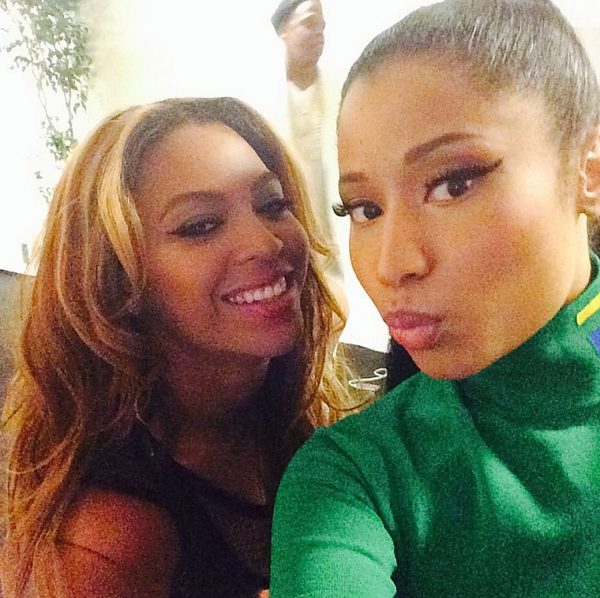
Is It Cool To Fanboy Out and Take a Selfie?

Does asking for the selfie turn the journalist into a fan, and therefore, their credibility is shot?
Or is it just a selfie? You know, like, everyone does it. And it's Anderson fricking Cooper, right?
Does it depend upon the situation? For example, if it's a serious story about politics and/or policy, probably no selfie, right? But if it's Beyonce ...
Or are you sacrificing your integrity/professionalism every time you fanboy out and ask to do the selfie?
Tuesday, October 11, 2016
What The F**k, New York Times!

Many news organizations opted to use asterisks in the key words like f**k and p***y.
But many outlets actually printed the full words and even displayed them prominently.
Here's how the New York Times justified the use of such coarse language in print and online:
The argument against using the words was driven by a concern that it would be jolting to readers, especially given that the story would be played so prominently on page one, and that there were other ways we could signal what Trump said without relying on the actual vulgar words.
Ultimately we decided that the words themselves were newsworthy, and that omitting them or merely describing them or slyly hinting at them would not have been forthright with our readers.
Did they make the right decision?
By running the full language, were they making a politically motivated decision? Should the potential impact of the words on the audience have been a factor in determining whether to use the full curse words?
Would you have printed the foul language or would you have danced around the issue in order to maintain civility?
Saturday, October 1, 2016
Should News Organizations Endorse Candidates?

Newspapers and other news organizations often make endorsements during election cycles, explaining to their audiences why they believe people should vote one way or another.
These endorsements usually run in the opinions section, which is usually made up of an entirely different staff than from those who create content elsewhere for the organization.
For example, USA Today this week released an endorsement for anyone other than Donald Trump for president. It's the first time in the 34 year history of the news organization that they took "endorsed" a candidate.
Should news organizations endorse candidates (even though USA Today didn't really endorse anyone ... they advocated against a candidate)?
Does this reveal an overall bias and thus overshadow all the other news produced by the outlet?
Or is this good service journalism, helping their audiences process and understand elections and issues?
Monday, September 12, 2016
Journalists Are Supposed to Provide a Forum for Public Criticism, Right?

Citing the conviction of a former football coach for sexual assault against children, the student-run newspaper took issue with the idea of celebrating Paterno:
"Paterno has not been a member of this university’s staff since 2011," wrote Lauren Davis, the opinions editor at The Daily Collegian. "He is no longer a community hero. Paterno was a remarkable part of this university for numerous years, and for that we have the right to be thankful. For those who attended Penn State while he was here, he has every right to remain a legend. He was a hero, and no one wants to see their hero fall.
But in light of these past years — even these past few weeks — this is in no way the right time or manner to 'commemorate' him, if he even deserves to be so."
The news organization has received hundreds of angry comments online.
Other comments are much worse and some get rather personal.
Multiple questions arise from this:
1. Even if this story is in the "opinions" section, is it acceptable for the journalist to take sides?
2. Would you be able to take an (apparently) unpopular opinion and put it into the world like this?
3. How would you react/respond to the critics? Would you state your case again or just allow them to vent?
4. As a journalist trying to be comprehensive, should you invite a leader of the opposite viewpoint to write their side of the story?
5. In a digital world, an essay like this could follow you. Some potential sources, employers, friends, whomever might find it and judge you based upon what you wrote. Would that make you reconsider the opinion or would you go for it anyway?
Monday, September 5, 2016
"Everyone Knows What's Ahead ..."
Did the media scare you away from the beach over the Labor Day weekend with their talk about the pending storm?
Here's what a meteorologist wrote on Saturday for philly.com:
My advice: Stay home if you’re already inland. If you must go to the shore, plan on coming back tonight at the latest. And tell your friends and relatives the same thing (which I have done to my friends and relatives). If you live at the shore, be prepared to “hunker down” for a few days-perhaps without power, and perhaps cut off by flooded roads. And take everything off balconies, porches, and lawns and bring it inside.
And yet, area beaches were unscathed by Tropical Storm Hermine.
So, did the media mess up? Did they hype up the storm because that draws eyeballs to their newscasts and stories?
Or, were they simply reporting the information - including the governor declaring a state of emergency for several counties - that they had?
Subscribe to:
Posts (Atom)